Passive Speakers – Professional Sound with Maximum Flexibility
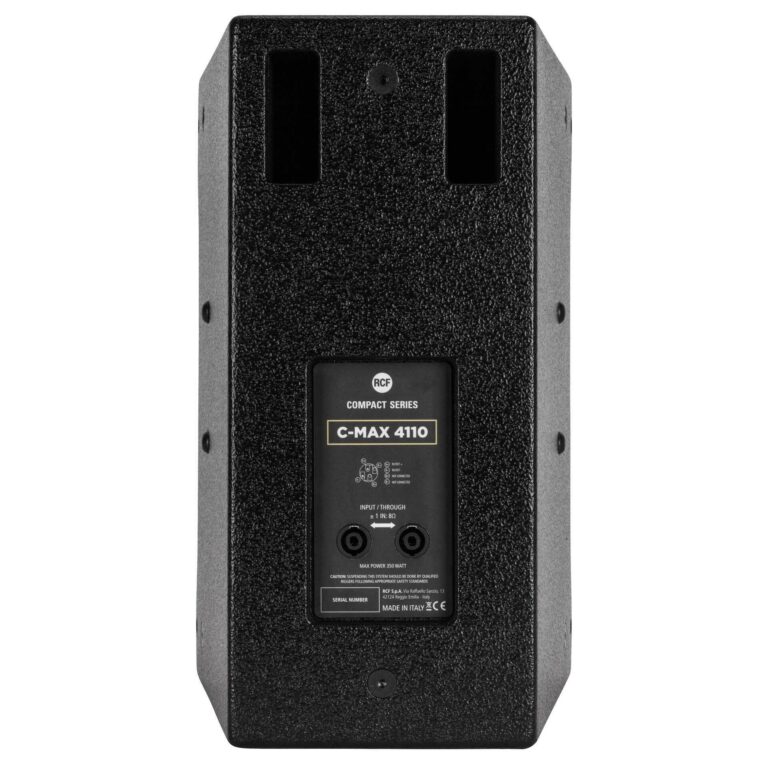
A passive speaker is a loudspeaker without a built-in amplifier. Unlike an active speaker, a passive loudspeaker requires an external power amplifier. This configuration offers a great deal of flexibility and makes passive speakers popular for professional PA systems, fixed installations, bands, DJ setups and events.
At SpeakerKoning, you’ll find professional passive speakers for a wide range of applications. From compact full-range loudspeakers for smaller sound systems to powerful 12-inch and 15-inch PA speakers for professional events.
Would you like to build a flexible system in which speakers, amplifiers and processing equipment can be selected separately? Then passive PA speakers are an excellent solution.
What Is a Passive Speaker?
A passive speaker does not contain a built-in power amplifier. The audio signal is sent to the loudspeaker by an external amplifier.
A simple passive sound system, for example, consists of:
Audio Source → Mixer → Power Amplifier → Passive Speakers
A more extensive PA system can also include subwoofers, processors and monitors.
The main advantage of this setup is that you can select the individual components separately and adapt them to the intended application.
Why Choose Passive Speakers?
Passive speakers have been an important part of professional sound systems for many years.
They offer several benefits, including:
- Flexible system configuration
- Choice of external amplifier
- Suitable for larger installations
- Easy to expand
- Wide choice of power ratings and sizes
- Suitable for professional PA systems
- Long service life
A passive system can therefore be particularly interesting for a fixed installation or a professional mobile PA setup.
Passive PA Speakers
A passive PA speaker is designed to deliver sufficient sound pressure and reliable audio reproduction for live performances and professional applications.
PA speakers are used for a wide range of purposes, including:
- DJs
- Bands
- Live music
- Events
- Theatres
- Clubs and associations
- Hospitality venues
- Presentations
- Churches
- Rental applications
When putting together a PA system, it is important to match the passive speakers with the right amplifier.
Passive 12-Inch Speakers
A 12-inch passive speaker is a versatile choice for many PA applications.
Combining a 12-inch woofer with a high-frequency driver allows a full-range speaker to reproduce a broad frequency range.
Passive 12-inch speakers are ideal for:
- Bands
- DJs
- Presentations
- Small and medium-sized events
- Hospitality venues
- Mobile PA systems
They often offer a good balance between size, sound pressure and portability.
Passive 15-Inch Speakers
For applications that require more bass and sound pressure, a 15-inch passive speaker can be an excellent choice.
Thanks to its larger woofer cone area, a 15-inch model can produce more bass than many smaller models.
Passive 15-inch speakers are commonly used for:
- DJ systems
- Bands
- Events
- Parties
- Professional PA systems
- Larger spaces
When very deep bass is required, a 15-inch top speaker can also be combined with one or more subwoofers.
Passive Full-Range Speakers
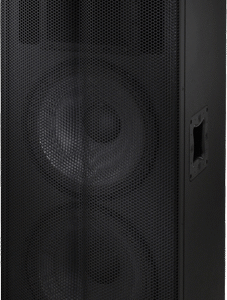
A passive full-range speaker is designed to reproduce several parts of the frequency spectrum from a single loudspeaker.
This makes a full-range speaker particularly versatile.
For smaller applications, a pair of full-range speakers may be sufficient. For larger events, they are often combined with subwoofers.
A typical professional setup looks like this:
Mixer → Amplifier → Passive Tops + Subwoofers
Combining Passive Speakers with an Amplifier
Since passive speakers do not have a built-in amplifier, choosing the right power amplifier is important.
The amplifier must be suitable for:
- The speakers’ power rating
- The impedance
- The number of speakers
- The desired sound pressure level
- The intended application
An unsuitable combination can result in insufficient performance or damage to equipment.
That is why it is advisable to consider the entire system as a whole.
Impedance in Passive Speakers
With passive speakers, impedance is an important technical specification.
Many professional loudspeakers, for example, have a nominal impedance of 8 ohms, although other configurations are also available.
When several speakers are connected to one amplifier channel, the total load changes. The amplifier must be suitable for this load.
Always check the technical specifications of both the speaker and the amplifier before connecting multiple passive loudspeakers.
Passive Speakers with Subwoofers
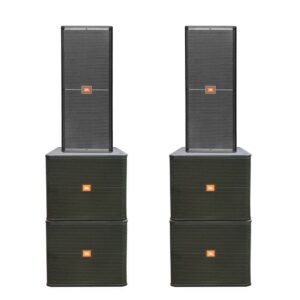
For a powerful PA system, passive tops are often combined with passive or active subwoofers.
The top speakers mainly handle the midrange and high frequencies, while the subwoofer takes care of the low frequencies.
A professional system could, for example, consist of:
Mixer → DSP / Crossover → Amplifiers → Tops + Subwoofers
This allows the full frequency range to be divided efficiently.
Passive Speakers for Bands
Bands regularly choose passive speakers because a separate amplifier and speaker configuration offers plenty of flexibility.
For example, a band can put together a system consisting of:
- Passive tops
- Passive or active subwoofers
- Power amplifiers
- Mixer
- Monitors
- Microphones
This type of configuration can be adapted to different venues and performances.
Passive Speakers for DJs
Passive speakers can also be an interesting solution for DJs.
A DJ setup could consist of two passive tops, one or more subwoofers and a powerful power amplifier.
The advantage is that the amplification can be placed centrally and the system can easily be expanded.
For mobile applications, however, it is important to take the extra weight of the external amplifiers into account.
Passive Speakers for Fixed Installations
Passive speakers are not only used in mobile PA systems. They can also be an excellent solution for fixed installations.
Examples include:
- Hospitality venues
- Theatres
- Churches
- Clubs and associations
- Sports facilities
- Event venues
- Commercial buildings
For specific installation solutions, other types of loudspeakers, such as 100V installation speakers, may be more suitable.
What Should You Look for When Buying Passive Speakers?
When buying passive speakers, several specifications are important.
1. Size
Many PA speakers are available in sizes such as 10, 12 and 15 inches.
2. Power
Look not only at the maximum power rating, but also at the nominal power rating and the specifications of the matching amplifier.
3. Maximum SPL
The maximum sound pressure level indicates how loud the speaker can play.
4. Frequency Response
Check which frequencies the speaker can actually reproduce.
5. Impedance
Impedance determines the electrical load the speaker places on the amplifier.
6. Connections
Check whether the loudspeaker has the connections you need for your installation.
7. Weight and Dimensions
For mobile applications, transport and setup are important considerations.
Passive or Active Speaker?
The choice between a passive and an active speaker depends on your application.
Passive Speakers
Choose passive speakers if you want to:
- Build a flexible system
- Choose the amplifier yourself
- Build a larger installation
- Control multiple speakers centrally
- Put together a professional PA system
Active Speakers
An active speaker is a good option if you want to:
- Set up your system quickly
- Avoid using a separate power amplifier
- Use a mobile sound system
- Choose a simple all-in-one solution
Both systems can deliver excellent performance. The most important thing is to choose a configuration that suits the way you intend to use it.
Buy Passive Speakers at SpeakerKoning
At SpeakerKoning, you’ll find professional passive PA speakers for DJs, bands, events, hospitality venues and fixed sound installations.
Whether you’re looking for a compact 12-inch speaker, need a powerful 15-inch passive top or want to put together a complete professional PA system, the right combination of speakers, amplifiers, mixers and subwoofers will deliver a reliable result.
Explore our range of passive speakers and combine the right loudspeakers with suitable amplification for your application.
Frequently Asked Questions About Passive Speakers
What Is a Passive Speaker?
A passive speaker does not have a built-in power amplifier. You therefore need an external amplifier to drive the speaker.
Do I Need an Amplifier for Passive Speakers?
Yes. Passive speakers require a suitable external power amplifier.
Which Is Better: Active or Passive?
Neither option is better in every situation. Active speakers are practical and quick to set up, while passive speakers offer plenty of flexibility when building professional systems.
Can I Connect Multiple Passive Speakers to One Amplifier?
Yes, but the total impedance and power handling must be suitable for the amplifier being used. Always check the specifications before connecting multiple speakers.
Are Passive 12-Inch or 15-Inch Speakers Better?
That depends on the application. A 12-inch speaker often offers a good balance between size and performance. A 15-inch model can deliver more bass and sound pressure.
Can I Combine a Passive Speaker with an Active Subwoofer?
Yes, you can. The active subwoofer has its own amplification and can be part of a system with passive tops, provided the connections and signal processing are configured correctly.
Professional Passive Speakers for Every PA System
A well-designed passive system offers maximum freedom. You choose which amplifiers, processors, subwoofers and speakers to use, and you can adapt the system as your requirements change.
From 12-inch and 15-inch passive speakers to complete professional PA setups: SpeakerKoning can help you put together a powerful and reliable sound system.
Passive, professional and flexible – discover the passive speakers at SpeakerKoning.

“I always go for the best quality at the most competitive prices.”
– Aart de Wouw