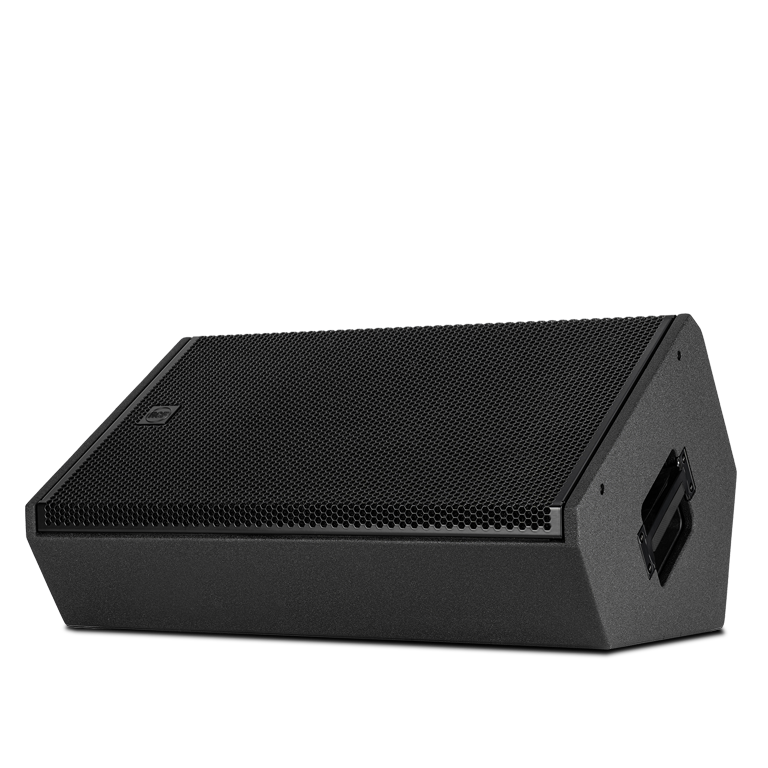
Monitors – Professional sound on stage
A good monitor is indispensable when musicians, singers, and speakers need to hear exactly what is happening during a performance. A stage monitor ensures that the sound from the stage is fed back to the performer clearly and in a controlled manner. This allows you to maintain control over vocals, instruments, and the entire mix while performing.
At SpeakerKoning, you will find professional monitor speakers for bands, DJs, theaters, events, churches, and any other application where reliable monitoring is essential.
From compact active monitors to powerful, professional floor wedges—the right monitor makes a significant difference to performance on stage.
What is a monitor speaker?
A monitor speaker is a loudspeaker specifically designed to feed sound back to the performer or user.
During live performances, a monitor is typically placed on the floor, angled toward the musician. This is also known as a floor monitor. Through the monitor, the artist might hear, for example:
- Their own vocals
- Other vocal parts
- Guitar
- Bass
- Keyboard
- Drums
- A portion of the front-of-house (main) mix
The goal is for the musician to be able to hear themselves and other key sound sources clearly, without relying on the sound coming from the main speakers.
Why are good stage monitors important?
During a live performance, effective monitoring is essential.
A singer who cannot hear themselves well may struggle with timing and intonation. A guitarist needs to be able to clearly follow their own instrument, and a drummer often requires a specific monitor mix.
Therefore, a good stage monitor provides:
- Clear reproduction
- Sufficient sound pressure
- Good intelligibility
- Reliable operation
- Control during live performances
- A better stage experience
The monitor does not always need to be set to an extremely high volume. A well-adjusted monitor mix and a high-quality speaker often yield a much better result.
Active monitors
An active monitor features a built-in amplifier, eliminating the need for a separate external power amplifier.
You can connect the audio signal directly to the monitor and then place it on the stage. Active monitors are popular because they:
- Can be set up quickly
- Require less separate equipment
- Are easy to transport
- Offer an optimal combination of speaker and amplifier
- Are well-suited for mobile productions
As a result, active monitors are a highly practical solution for bands, DJs, and mobile sound engineers.
Passive monitors
A passive monitor does not have a built-in amplifier; it requires an external power amplifier.
The advantage is that you have more freedom when configuring your system. For example, multiple passive monitors can be combined with a suitable amplifier and processor.
Passive stage monitors are widely used in larger, permanent, and professional PA installations.
Floor monitors for bands
For bands, stage monitors are often an essential part of the PA system.
Each musician may require a different monitor mix. A vocalist might want to hear primarily their own voice, while a guitarist might need more guitar and drums in their mix.
By using multiple monitor lines and auxiliary (aux) outputs on the mixer, a separate monitor mix can be created for each musician.
A professional digital mixer often provides additional options for routing and managing individual monitor mixes.
Monitors for vocalists
For vocalists, a good monitor is especially important.
The voice must be reproduced clearly and intelligibly, without the monitor producing an unnecessary amount of other frequencies.
A well-positioned monitor ensures that a vocalist can hear themselves clearly, allowing them to maintain better control over their performance.
A reliable monitor solution is also useful for presentations, theater, and other applications involving spoken word.
Monitors for DJs
DJs can also make use of monitor speakers.
A DJ monitor is typically placed close to the DJ, allowing them to accurately track the music and timing without relying solely on the sound coming from the venue’s main PA system.
For DJ applications, key features include powerful low-frequency reproduction, sufficient sound pressure, and a fast transient response.
Depending on the situation, an active full-range monitor or a…